










Hinduism
No cutting your nails on Thursday, no visits to the barber on Tuesdays, and don’t eat beef. Ever. For Charan Soma (12), these directives are his way of life.
“We have a lot of different rituals and traditions, not like a usual family would do,” Soma said. “For us, it’s almost a job.”
While there is a small minority of people in the Boulder County area who practice Hinduism, Soma finds ways to celebrate and honor his religion and its history.
“Hinduism is one of the world’s oldest religions. No one really knows where it came from,” Soma said. “One really unique thing about my religion is that we are polytheistic, meaning we have lots of gods.”
Soma and other Hindus celebrate festivals that mark religious events. Diwali, the festival of light, Holi, the festival of color, and Navaratri, the nine nights festivals are significant to Soma. Even when festivals aren’t being celebrated, Soma incorporates his faith into his everyday life.
“Once every day I listen to a scripture or two,” Soma said. “It’s just been a cornerstone in my life, something I can rely on.”
Soma and his family come from the Brahmin caste, which is the highest of the Hindu Varnas. Hinduism defines society through four Varnas: Shudras, Valishyas, Kshatriyas, and Brahmins. Though Soma and his family practice his religion in a stricter way than most, he has one big take away for others.
“Our religion isn’t really supposed to be scary or anything,” Soma said. “It’s very relaxing. It’s very chill. You can say you’re Hindu and just be a Hindu. There’s no rules you have to follow specifically.”
Catholicism
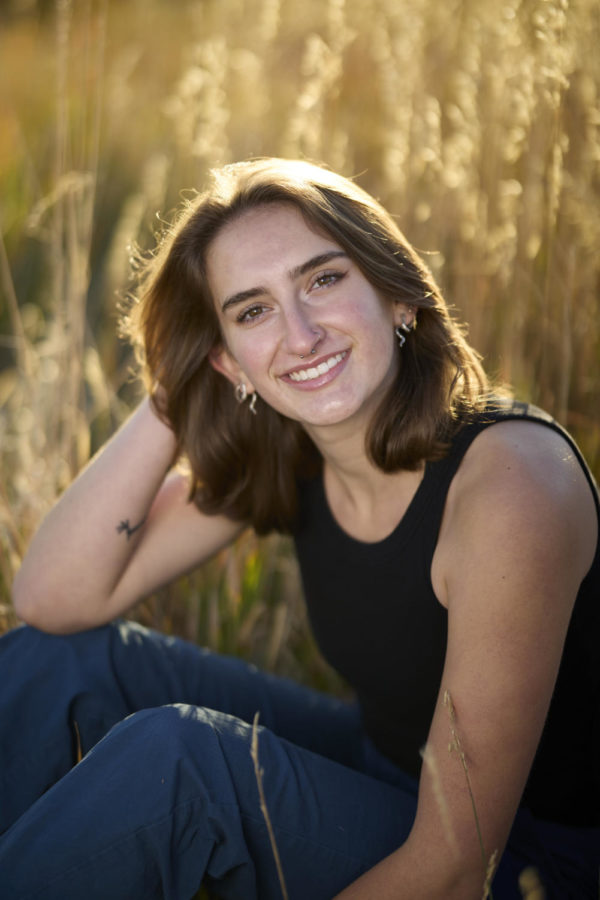
Stepping into a church in Broomfield, Celia Mahoney (10) hears a familiar tune, a hymn that doesn’t seem so foreign compared to the rest of her life.
Throughout the service, she is reminded of all the new—the new house, new friends, new school—but another feeling is there. A feeling she hasn’t felt since she lived in Illinois. A feeling of belonging, of normalcy, of home.
“We’d only been here for probably less than a week, everything was really unfamiliar,” Mahoney said. “We ended up going to a church in Broomfield. It just felt normal. It didn’t feel as strange as being here.”
Catholicism has been a place of home for Mahoney throughout her life; from Geneva, Ill. to Superior, Colo., and from childhood to adulthood in Confirmation.
“I went through the Sacrament of Confirmation, which is supposed to be your transition into adulthood through the church,” Mahoney said. “You get to pick a sponsor and your confirmation saint. I found my own way of praying and practicing without having to confer with the rest of my family.”
The greatest change in the transition to becoming a teenager and adult is finding independence. Independence made Mahoney her own person and follower of her faith.
“I think that people’s religion, specifically in Catholicism, is a very personal thing.” Mahoney said. “I don’t practice my faith the same way my brother does, or the same way as my parents. We each have our very own way of practicing faith.”
From year to year, school to school, and state to state, Mahoney’s faith has been an important part of her life.
“We believe that the world is a gift from God, and so we have to take care of it and take care of everybody around it, because everybody around you is also a gift from God.”
Judaism
The hallways in any high school environment are a cacophony of sound. Hushed whispers of juicy gossip, last-minute homework answers, rapid footsteps rushing to the next class period.
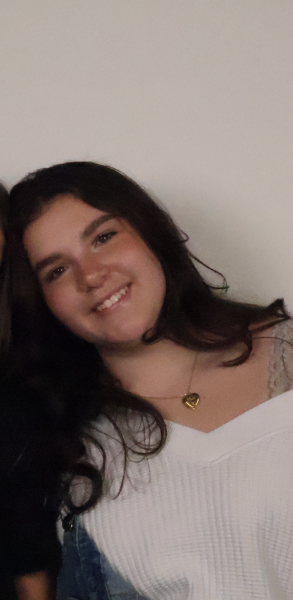
Ruby Stein (12) drowns out the chaotic uproar as they break off a piece of tape, hanging a poster—”Join us in the Jewish Culture Club! Everyone is Welcome.” The page shares the dates and times of meetings, and Stein feels a swell of pride knowing that a club they started and are president of fosters inclusion and community.
Yet something shatters this moment of solace—a whisper: “I would never go to that stupid Jew club.”
The nearly silent whisper blares louder than the sounds echoing through the hallways.
Stein knows from experience how antisemitism affects the Jewish population, learning not to sit there and tolerate harmful assumptions about their religion. There is power in community, finding friends and family members who know the sheer impact of people’s words.
“I talk about the Jewish Culture Club, and people associate that with a response to antisemitism, or assume everything that Jewish people do is like a response to antisemitism,” Stein said. “Our culture just exists, and our culture being out there and existing is not a response to anything.”
This is the exact reason that Stein decided to start Jewish Culture Club. Stein wanted Jewish students to have a place where they felt like they could come and let loose around other people who were going through the same things as them.
“Sometimes, as a Jewish student, with everything going on, it’s easy to feel kind of isolated from your peers,” Stein said. “You just feel kind of like you can’t be completely yourself around people sometimes.”
Passionate about sharing unique pieces of Jewish culture with as many people as possible, Stein brought challah braiding to the club last year. This event helped Stein stress the importance of inclusion— anyone who wants to join the JCC can, regardless of their religious beliefs.
“It’s comforting to have a community and have beliefs because I think without it, the world is a very scary place no matter what your beliefs are,” Stein said. “My spirituality comes from the community.”
Stein has built up their faith and spirituality as a Jewish person through these shared experiences, holidays, delicious foods. All of it is important to who they are today.
“I don’t think it’s specific to Judaism, but the way that I’ve experienced it, I think my spirituality comes from the community, nature, and the things around me,” Stein said.
Normanism
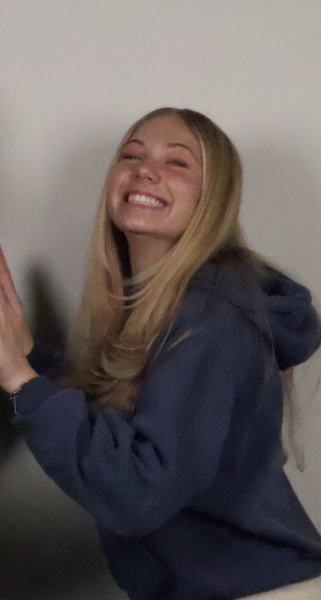
While many teenagers sit at home on a Tuesday night, Molly Fowles (12), makes sure to show up for the young women in her community. When others might not see many familiar faces at events like graduation parties or gatherings, Fowles knows that she can always count on seeing members of her community.
Fowles has found a community like no other in her church’s community.
“I’m Mormon or LDS,” Fowles said. “I’m really connected to faith in the sense that I have a strong connection with God, but I feel like it goes deeper than religion in a lot of ways”.
Mormons or members of the Church of Jesus Christ of Latter Day Saints believe that Jesus is the messiah, that he allows humankind to be saved from their sins, and that the original church described in the New Testament of the Bible has been restored in modern times.
For Fowles, her faith and belief in Jesus brings a sense of clarity to her life.
“I feel like I know certain things to be true, and I just have that clarity, and even if I do question stuff, there’s still things I know,” she said.
Fowles hopes to help other girls in her community to feel the same connection that she does. She feels that being committed to her role is essential for this to happen.
“We all get together with the younger girls and the older girls, and we just do activities,” Fowles said. “To a lot of the younger girls, it makes a big difference. I know that they count on us being there as the older girls,”
In a time where many may have misconceptions about her faith, Fowles encourages people to do what they can to understand her community.
“There’s just a lot of misinformation and stuff online,” Fowles said. “I feel like people should do their own research. Just go to church and see how you feel. I feel like, if people did that, they’d realize it’s not weird.”
Despite misconceptions, Fowles and her community don’t let this faze them.
“When I go to church, everyone talks to each other, all of them feel like family,” Fowles said. “I feel like that’s the best part.”
Christianity
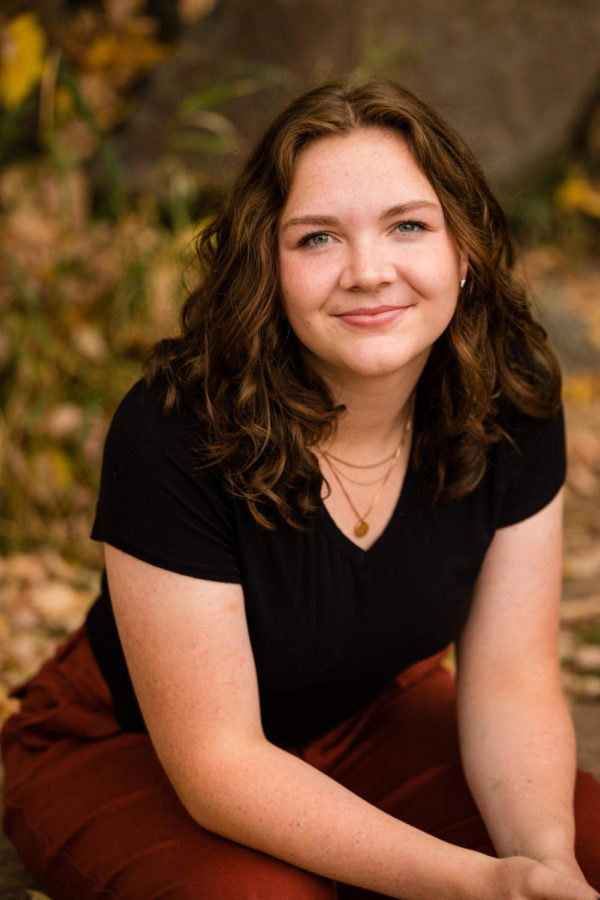
Looking out a plane window, Malone Schaefer (12) breathes in, nervous but excited for the opportunity to work at a camp in Oregon her freshman year.
Little did she know, this trip would alter her perspective and change her life for the better.
“My family was Christian, but I didn’t have a relationship with Jesus until I got an opportunity to work at a Young Life camp in Oregon for a month,” Schaefer said. “That’s when I fully gave my life to Jesus.”
As Schaefer has grown up and worked with Young Life she has discovered a deeper meaning behind it and truly realized what her religion means to her.
“You kind of just have to focus on Jesus and serving him in a way that will help these campers meet Christ,” Schaefer said. “That changed my perspective on just about everything”
Since then, Christianity has become the biggest thing in Schaefer’s life. It carries her through all of her tough times and decisions.
“It’s my whole life. I wouldn’t do anything without my religion behind it.” Schaefer said.
Schaefer loves to participate in her religious community and takes pride in her religion and sharing it with others. It is very important to her that she is able to show people what a life with Jesus can look like.
“I lead middle school seventh grade girls in Young Life, and it’s to help introduce them to God and help them hear the gospel and help them grow in their faith.”
And while Schaefer loves to help spread and teach her faith and help others grow, she also makes sure to surround herself with people who can do the same for her.
“People who I surround myself with are really important, having specifically my boyfriend, who’s my best friend. He encourages me and my faith every day,” she said.
Schaefer knows that for some people, Christianity is something that’s hard to believe in.
“I think that’s a lot for one person’s brain to handle, unless they’ve experienced something of God, and so I think that can be hard for people to even believe why I believe what I believe,” she said.
Overall, Schaefer wants to share her love of Jesus so everyone can experience the beautiful experiences that she has.
“Sometimes, like, instead of sharing the gospel with them directly, sometimes the best way to push people towards Jesus is just loving them the way Jesus would,” she said.