












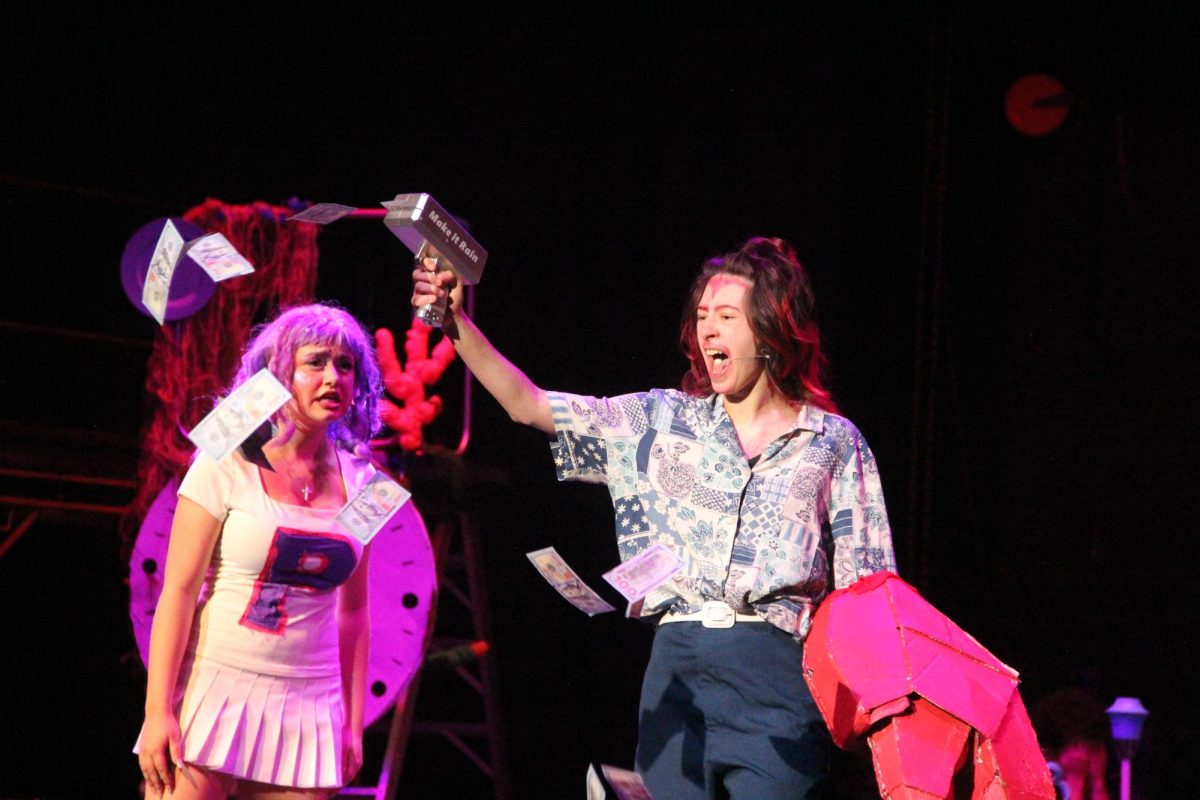
It’s tech day, only a few weeks before the Fall Play. Actors pace down theater hall, memorizing lines with scripts in hand, crew members plan out tech logistics, and friends laugh amidst the stress.
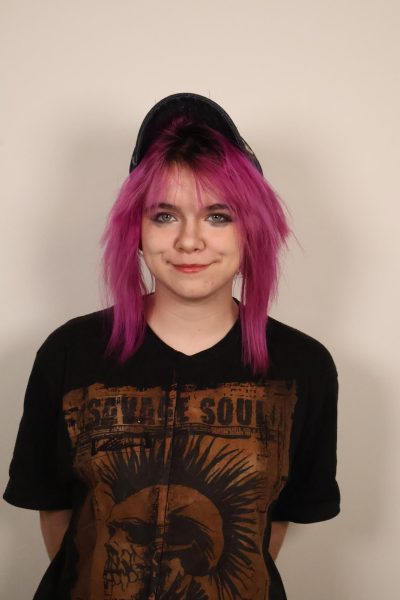
Yet, there’s a lone sophomore sitting in the ofind a place to fit in while adjusting to his new high school.
“I was sitting in the theater hall crying while everyone was working and getting stuff done,” he said. “I felt so lonely.”
During his sophomore year, Shiffler moved from Michigan to Colorado, and struggled to find a place at Monarch after leaving his old school, friends, and community behind.
“I had just moved probably, like, a month or so before, and I was just feeling really sad,” Shiffler said. “I’d gotten a text from my friends being like, ’We’re starting work on the show today in Michigan. We really miss you,’ That kind of just caused me to break down.”
In a moment of vulnerability and sadness, a new face appeared in front of Shiffler, welcoming and kind.
“My friend came up to me, and I’d only known her for probably two weeks,” Shiffler said. “We didn’t know each other very well, but she sat next to me, and she just gave me a hug and told me it’s okay.”
Shiffler will always remember the comforting words she said to him.
“I know you miss your friends,” she said. “This is your home now, and these are your friends now.”
“I always think about that because I was so fragile sophomore year,” Shiffler said. “I see that a lot in underclassmen in theater now. I just want to make people feel like I did when I was doing so bad. I really try to be a mentor and be a pillar of support for the underclassmen and for everyone.”
Similarly, Will Epperson (12) struggled to find a place at school where he felt like he belonged before he joined theater as a sophomore.
“Before theater, I was on the football team, and it was an entirely different experience coming from the football team to theater,” he said. “Theater was just so much more open, inclusive. They cared about me.”
He noted how the cultures in football and theater are drastically different, and how choosing theater was eventually the right choice.
“I’ve become a lot happier because it’s such an open space, people kind of accept me for who I am,” Epperson said. “In football, it was very person against person. You’re kind of hoping the guy in front of you would lose, so you could take his spot. But here, everyone’s actually working together.”
Epperson admires being in theater because everyone involved is extremely accepting. Shiffler believes that is so because the majority of people in theater are queer, and queer people are typically underrepresented in other clubs at school.
“I think that queer people thrive in theater because being someone else is freeing,” Shiffler said. “I think a big part of queerness is being someone else, whether it’s like masking who you are to everyone else, or even like drag is such a big part of queer culture, which is performing.”
Whereas other clubs or programs may feel exclusive, theater feels welcoming to queer people at school because it surrounds them with more like-minded people, which, in turn, creates a more inclusive and comfortable space.
“I think anyone can thrive in theater, but I think that queer people thrive even more, and it’s great.” Shiffler said.
Theater teacher Gwendolyn Lukas-Doctor knows that kids who struggle to find a place in school that aligns with their identities thrive in theater, and given that, she ensures theater remains a safe space.
“Kids should always feel safe here,” she said. “I can’t control every single child’s perception of the world, but one thing that I can do is to let kids know that we’re here together.”
Just as Lukas-Doctor aims to help students thrive and grow, she feels the same is done back to her.
“I’ve become more open minded to lots of different things,” she said. “Working with teenagers, it changes you for the better.”
The journey of discovering belonging in a new place isn’t easy—yet the intrinsic inclusivity and culture of Monarch’s theater department helped even more students than just Shiffler and Epperson find a place at school.
“Becoming someone else is so free, that’s the best part,” Shiffler said. “Becoming someone else really is just, like, undescribable.”